Dogs experience the world very differently from humans. While people rely mostly on sight and sound, dogs depend heavily on their sense of smell. Their noses are extremely powerful, allowing them to detect and interpret scents in ways that humans cannot even imagine.
For many pet owners, this explains why dogs sometimes behave in ways that seem unusual—especially when they approach and sniff people closely during greetings.
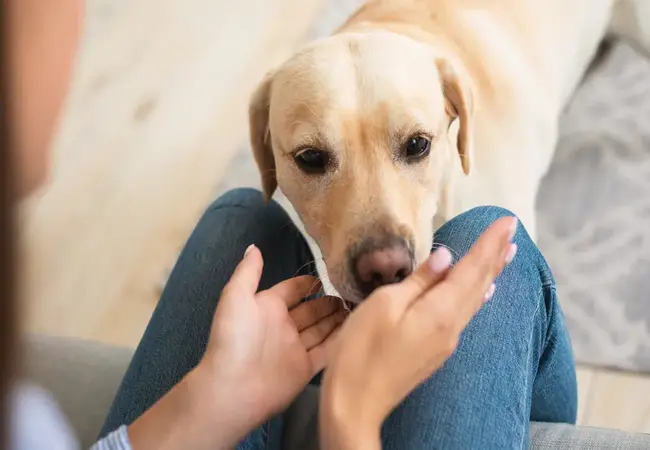
Why Dogs Sniff People
Although it may feel awkward to us, sniffing is completely natural and essential behavior for dogs. It is one of their primary methods of communication, similar to how humans use speech, facial expressions, and eye contact.
Dogs use scent to gather detailed information about their surroundings, including other animals and people. When a dog sniffs a person, it is simply trying to understand who they are.
How Dogs Gather Information Through Smell
The human body naturally releases a wide range of chemical signals through sweat glands. Certain areas, such as the underarms and lower body, carry unique scent markers that can reveal information about identity, emotions, and even health.
Dogs can detect these subtle differences instantly. Their sense of smell is so advanced that they can gather a surprising amount of information just by being close to a person.
From a dog’s perspective, sniffing is not random—it is a highly efficient way of “reading” the world.
A Dog’s Natural Form of Greeting
When a dog approaches someone and begins to sniff, it is usually behaving in a friendly and social way. This is their version of saying hello.
Through scent, dogs can learn:
- Who a person is
- Whether they are familiar or unfamiliar
- Emotional cues like stress or calmness
- Whether the environment feels safe
Since dogs cannot speak, they rely entirely on their senses and instincts to communicate and understand their surroundings.
Is Dog Sniffing a Bad Behavior?
In most cases, no. Sniffing is completely harmless and natural. It is not meant to be rude, invasive, or inappropriate—it is simply biological behavior.
However, in human social situations, it may sometimes feel uncomfortable. Understanding the reason behind it can help owners respond more calmly and appropriately.
How to Manage Unwanted Sniffing Behavior
If a dog’s sniffing becomes excessive or uncomfortable for guests, it can be managed with basic training.
Helpful commands include:
- “Sit”
- “Stay”
- “Leave it”
With consistent training, patience, and positive reinforcement, dogs can learn more appropriate ways to greet people. This helps improve behavior while strengthening the bond between pets and owners.
Final Thoughts
Sniffing is one of the most important ways dogs interact with the world. What may seem strange to humans is actually a sophisticated communication tool rooted in biology and instinct.
Understanding this behavior helps build better relationships with pets and allows owners to respond with patience, care, and confidence.