I visited my daughter’s grave every Sunday, blaming myself for the night I didn’t pick her up. Then the groundskeeper told me another woman had been visiting with daisies and apologies. I thought I already knew how my daughter died, but I was wrong about who’d buried the truth.
Every Sunday
I cried at my daughter’s grave every Sunday for a month before Otis, the cemetery groundskeeper, finally stopped pretending he didn’t see me.
That fourth Sunday, I brought white roses again because the florist had called them “proper.” Maya would have made a face at that.
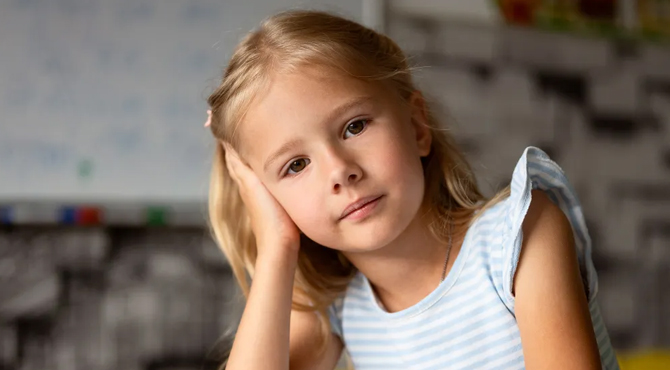
My seventeen-year-old daughter liked yellow daisies, chipped nail polish, and jeans with paint on the knees.
But Maya was gone before I could bring her daisies on some ordinary birthday, gone before graduation or the art scholarship letter, and gone before I could take back the last thing I said to her.
That night, she’d asked me to pick her up because she was tired and scared of driving in the rain. I had been tired of standing between her and Jordan.
“Ask your father,” I’d said. “I’m done being the referee tonight. You two need to sort yourselves out.”
Two hours later, the police knocked on our door. Two cars had gone off near the bridge. No survivors.
The funeral director said the casket had to stay closed. The officers told me it was kinder that way.
So, every Sunday, I knelt at Maya’s grave and whispered:
“I’m sorry, baby. I should have picked you up.”
Jordan came with me twice, then stopped.
“It isn’t healthy, Jackie,” he said. “You can’t keep doing this.”
“I’m her mother,” I replied.
“Then act like it. Stop falling apart every Sunday.”
That was my habit with Jordan. I always softened. When he called Maya’s art a hobby, I said, “Your dad just worries.” I had spent years translating his harsh words into something kinder.
But that morning, I was too tired.
“I’m going to see my daughter,” I said, and left.
What the Groundskeeper Knew
At the cemetery, rain soaked through my coat as I set the roses by Maya’s stone.
“Maya,” I whispered, touching her name. “I’m sorry.”
Behind me, boots scraped on gravel.
“Ma’am?”
I turned. Otis, the cemetery groundskeeper, stood there.
“I didn’t mean to scare you.”
“It’s fine,” I said, wiping my face.
He looked at the flowers, then at me.
“Can I ask you something?”
“Okay,” I said.
“The woman who visits your daughter on Thursdays always brings daisies. She says Maya liked them. Is that true?”
My hand went cold against the stone.
“What woman?”
“Tall, blonde. Drives a dark SUV. Comes early.”
“No one else visits Maya.”
“Yes, ma’am. She does.”
“What does she say?” I asked.
Otis looked toward the empty road.
“She apologizes.”
My stomach tightened.
“Why would a stranger apologize to my daughter?”
“I don’t know all of it,” he said. “But I know guilt when I see it.”
He lowered his voice.
“Please don’t cry. But you don’t know the whole truth about your daughter.”
“The police told me the truth.”
“The police told you about the road,” Otis said. “Maybe not why she was on it.”
The Woman with the Daisies
Thursday morning, I parked outside the cemetery gates.
At 8:06, a dark SUV pulled in.
A woman stepped out holding yellow daisies.
I got out before she reached the grave.
“Are those for my daughter?”
She froze, the flowers shaking in her hand.
“Answer me.”
“Yes,” she whispered. “And mine.”
“Who are you?”
Her eyes filled.
“Katherine. My daughter was Sadie.”
The name hit like cold water.
Sadie—the girl in the other car. The girl everyone said had been racing Maya.
“Leave,” I said.
“Please, Jackie.”
“You don’t get to say my name.”
“I know,” she held the daisies tighter. “But Sadie said yours before she died. She survived until the next morning. The hospital called me in. She could barely speak, but she kept trying to explain. I should have told you. I was ashamed of the truth.”
“What truth? Speak clearly. No riddles.”
Katherine looked at Maya’s grave.
“The truth that I raised my daughter to think winning mattered more than breathing. They weren’t racing. Sadie asked Maya to meet near the bridge to apologize for spreading rumors about her portfolio. She was dropping out.”
“Why?”
“Because she knew Maya would win. And because she was tired of me pushing her to challenge a girl she actually admired.”
“Then why did they leave in that storm?”
“The rain got worse. They were heading home. Then Maya’s phone rang.”
My chest tightened.
“Who called?”
Katherine’s voice broke.
“Your husband.”
“No.”
“Sadie said Maya answered and started crying. She kept saying, ‘Dad, please. Not tonight.’ Then she grabbed her things and ran to her car.”
“Jordan loved her.”
“I’m sure he did,” Katherine said. “But my daughter had no reason to spend her last words lying about him.”
She reached into her coat and pulled out a black leather sketchbook.
“Maya’s. Sadie must have picked it up before they ran to their cars. The hospital gave it to me by mistake. I’m sorry.”
Maya’s Sketchbook
I opened the cover.
The pages were filled with drawings.
One showed me at the kitchen sink, one hand over my mouth.
Below it, Maya had written:
“Mom Trying Not to Cry.”
I remembered that night.
Jordan had told her art school was for fools.
I had stood at the sink, pretending I was fine.
On the next page, she had written:
“Dad says artists become burdens. Mom says he just worries.”
Below that was one line that cut through me:
“I wish she’d stop trying to make him kinder.”
I sat down hard on the wet grass.
Katherine knelt across from me.
“I need to know everything, Katherine,” I said. “Please.”
“Then don’t stop with me,” she replied. “Talk to Maya’s teacher.”
What Maya Never Told Me
That afternoon, I met Ms. Alvarez in the art room.
“Was Maya the front-runner?” I asked.
“By far,” she said. “The board told me a week before.”
“Was she going to reject it?”
“She came to me the day before the accident,” Ms. Alvarez said. “She was scared—not of losing, but of winning. Your husband made art sound meaningless. He told her if she accepted, she could pay for her own car, insurance, and college.”
“And you told her?”
“To wait. To bring you in so we could talk together.”
“Maya never asked me.”
“I think she wanted to,” Ms. Alvarez said. “But she was afraid you’d explain him away again.”
I drove home and checked our phone logs.
There was one call from Jordan to Maya that night—six minutes.
Six minutes of pressure before she ran out into a storm.
The Truth Comes Out
When Jordan came home, the sketchbook was on the table.
“Did you call Maya that night?” I asked.
“No.”
I slid the call log forward.
“Try again.”
His jaw tightened.
“You’re grieving. You’re not thinking clearly.”
“I buried our daughter, Jordan. Don’t talk to me like I misplaced a grocery list. What did you say?”
“I told her not to come home unless she was ready to refuse that ridiculous scholarship.”
“You shut her out. You made home feel unsafe, so she ran into a storm.”
He looked past me at the sketchbook.
“No one needs to know about this.”
“The memorial showcase is tomorrow,” he said. “Keep it appropriate.”
“Appropriate?” I said. “You mean you’ve suffered enough embarrassment because your daughter wanted to be an artist.”
“If you accuse me in public, people will think grief broke you.”
“Grief did break me,” I said. “Just not the way you hoped.”
The Memorial Showcase
The next evening, at the memorial, Katherine stood by my side.
When I took the microphone, I looked at Jordan in the front row.
“My daughter, Maya, loved yellow daisies,” I said. “I forgot that because grief made me listen to everyone but my child. For a month, I believed Maya died after making a reckless choice. But Maya wasn’t reckless. She was talented, scared, and carrying pressure no child should have carried alone.”
“That’s private family business,” Jordan snapped.
“Let her finish,” Ms. Alvarez said from the crowd.
“My daughter was told the thing she loved most made her foolish,” I continued. “She was told support could be taken away if she chose her own future.”
Katherine stepped forward.
“Sadie survived long enough to tell me the girls weren’t racing. She wanted Maya to take the scholarship because Maya had earned it.”
I took Katherine’s hand.
“We can’t bring our daughters back, but we can stop letting the wrong story shadow their talent. So Katherine and I are creating the ‘Maya and Sadie Young Artists Fund,’ for students who need someone to believe that art isn’t foolish.”
As the room applauded, Jordan stood alone.
No More Roses
Afterward, he followed me into the hallway.
“You humiliated me, Jackie!”
“No, Jordan,” I said. “I stopped helping you humiliate my daughter. I’m leaving because you scared her and then let me carry her death by myself.”
The following Sunday, I returned to the cemetery with daisies for Maya and tulips for Sadie.
Katherine met me at the gate.
As I knelt, I touched the flowers and whispered:
“No more roses, baby. I hear you now.”
For the first time since the funeral, I left my daughter’s grave with dirt on my hands instead of guilt in my chest.