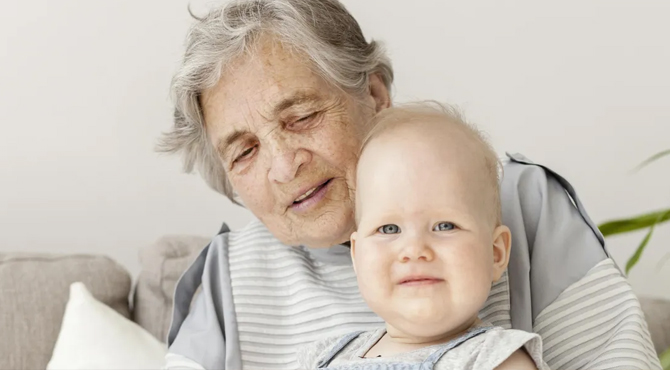
My husband passed away after sixty-two years of marriage.
Harold and I had known each other since high school. He was the boy who walked me home with his books tucked under one arm and a nervous smile on his face. He was the young man who asked me to marry him beneath the oak tree behind our school. He was the father of my two sons, the grandfather of three beautiful children, and the quiet center of my entire life.
So when Harold passed away peacefully in his sleep last month, something inside me seemed to go quiet forever.
I knew a day like that would come. At eighty-two, you understand that time does not stop for anyone. But knowing that did not make the empty side of the bed any easier to face.
The funeral was full of people.
Neighbors. Old friends. Former coworkers. Church members. Family.
Everyone had a kind word for Harold.
“He was such a good man.”
“He helped me when I had nothing.”
“He never wanted credit for anything.”
I heard those words again and again, but they seemed to float around me like sounds coming from another room.
All I could do was stare at the polished wooden coffin and think, How can a whole life fit inside that small space?
When the service ended, people began slowly leaving the church. My sons stood nearby, speaking quietly with relatives. I was still sitting in the front pew, holding a folded tissue in my hand, when I heard quick footsteps.
A girl came running toward me.
She couldn’t have been more than twelve or thirteen years old. She had brown curls, serious eyes, and a little gray coat that looked too thin for the weather.
She stopped in front of me and asked softly, “Are you Harold’s wife?”
I nodded, confused.
“Yes. I’m Margaret.”
The girl reached into her pocket and pulled out an envelope.
“Your husband asked me to give this to you on this exact day,” she said. “At his funeral. Those were his instructions.”
My hand trembled as I took it.
Before I could ask who she was, she stepped back.
“I’m sorry,” she whispered. “I have to go.”
Then she turned and ran out through the church doors as quickly as she had appeared.
The Letter Harold Left Behind
I did not open the envelope until I got home.
The house was full of flowers, food trays, and whispered conversations, but I felt as though I were walking through a dream. I excused myself, went into Harold’s study, and closed the door.
For a long moment, I simply stared at the envelope.
His handwriting was on the front.
For Margaret.
My heart twisted.
Inside was a letter and a key.
The first lines stole my breath.
My dearest Margaret,
I should have told you about what happened sixty years ago. I thought I had buried this secret forever, but it haunted me for the rest of my life. You deserve to know the truth. This key opens the garage at 1147 Miller Road, Unit 122.
I stopped reading.
A garage?
Harold had never mentioned any garage.
We had shared bank accounts. Shared bills. Shared holidays. Shared grief, joy, arguments, and ordinary Sunday mornings. Or at least, I had believed we shared everything.
My fingers tightened around the key.
I continued reading.
Please go alone first. What you find there may hurt you, but I pray that one day you will understand why I kept it hidden.
That was all I could bear.
My breath came fast. My mind began creating terrible possibilities. A second family. A crime. Money hidden from us. A betrayal so large it had followed him for six decades.
I grabbed my coat, called a cab, and gave the driver the address.
All the way there, I held that small key in my fist so tightly it left a mark in my palm.
Garage No. 122
Miller Road was on the outskirts of town, past the old warehouses and empty lots where weeds grew through cracked pavement.
The garage facility looked forgotten. Rows of faded metal doors stretched beneath a gray afternoon sky.
I found Unit 122 at the very end.
For a moment, I could not move.
The lock was old but well-oiled. The key slipped in easily.
When I lifted the door, the metal groaned loudly, and cold air rushed out.
The garage smelled of dust, wood, and time.
There was only one thing inside.
A massive wooden box sat in the middle of the floor. It was covered in cobwebs and a thick layer of dust. On the lid, someone had carved one word.
Forgiveness.
My knees weakened.
I brushed the dirt away with shaking hands and opened it.
For a second, everything went black.
Inside were photographs.
Letters.
A small white baby blanket.
A silver locket I recognized immediately.
And a newspaper clipping from sixty years ago with the headline:
LOCAL GIRL LOSES FAMILY HOME AFTER FIRE
At the bottom of the box was a photograph of Harold at nineteen, standing beside a young woman I had known very well.
Clara Whitmore.
My best friend.
The same Clara who disappeared from my life just before my wedding.
The same Clara I believed had moved away without saying goodbye.
The same Clara whose absence had broken my heart for years.
I collapsed onto the floor, clutching the photograph in both hands.
“Oh my God,” I cried. “What have you done, Harold?”
The Friend I Lost
Clara and I had been inseparable in high school.
She was bold where I was shy. She could make a whole room laugh. She used to say Harold and I were the most stubborn love story she had ever seen.
Then, three months before my wedding, Clara vanished.
Her family’s house had burned one night while they were away visiting relatives. No one was hurt, but they lost nearly everything. A week later, Clara sent me a short note saying she had moved to another state to stay with an aunt.
I wrote back.
No answer.
I wrote again.
Still nothing.
Eventually, life carried me forward. I married Harold. We had children. But sometimes, especially on quiet evenings, I wondered why Clara had left me behind so completely.
Now I sat in a secret garage, holding proof that Harold had known something.
With shaking hands, I opened the first bundle of letters.
They were from Clara.
Every one of them was addressed to me.
Dear Margaret, I miss you terribly…
Please don’t believe what Harold said…
I never meant to hurt you…
My stomach turned.
What had Harold said?
Why had I never received these?
I dug deeper and found another envelope. This one was in Harold’s handwriting.
Read this next, Maggie.
Only Harold had called me Maggie.
I opened it.
Harold’s Confession
The fire at Clara’s house was my fault.
The words blurred before my eyes.
Not because I meant harm. I would never have done that. But I was young, careless, and ashamed. That night, Clara’s little brother and I were fixing an old motorbike behind their shed. I knocked over a lantern. We thought we had put out every spark. We were wrong.
I pressed a hand to my mouth.
The fire spread after everyone had left. No one was injured, but the damage ruined her family. I panicked. Clara knew the truth, and she begged me to confess. I was terrified I would lose my job, my future, and you.
So I did the worst thing I ever did.
I told Clara that if she exposed me, people would think she had been careless too. I let fear make me cruel.
A sob broke from my chest.
She left town because her family had nothing left. She wrote to you many times, but I took the letters before you saw them. I told myself I was protecting our future. In truth, I was protecting myself.
I could barely breathe.
For sixty-two years, I had slept beside a man who had hidden this from me.
For sixty-two years, I had loved him honestly, while he carried a lie between us.
I wanted to hate him in that moment.
Part of me did.
What Was Inside the Box
But the box held more than letters.
There were bank receipts. Dozens of them.
Then hundreds.
Payments sent every month to Clara Whitmore.
Medical bills paid.
School fees.
Rent deposits.
College tuition.
A deed to a small house.
Receipts for repairs, groceries, winter coats, dental appointments, and later, nursing care.
Harold had not simply buried his secret.
He had spent the rest of his life trying to repay it.
At the very bottom of the box was one final folder.
Inside was a recent photograph of Clara as an old woman, sitting in a wheelchair beside a young girl with brown curls and serious eyes.
The girl from the funeral.
On the back of the photo, Harold had written:
Clara passed away last spring. Her granddaughter, Lily, is alone now. I have provided for her education, but money is not family. Margaret, I know I have no right to ask anything of you. But if there is any goodness left in the memory of the man you loved, please meet her. She should not carry the weight of my sins.
I sat there until the cold crept into my bones.
The man I had loved was not the man I thought he was.
And yet, somehow, he was also exactly the man everyone had described at the funeral.
Flawed.
Ashamed.
Generous.
Cowardly once.
Kind for a lifetime after.
I did not know how to hold both truths at once.
Meeting Lily
The next morning, I called the number Harold had left in the folder.
A woman from a small community home answered. When I asked for Lily, my voice trembled.
An hour later, I was sitting across from the girl who had handed me the envelope.
She looked frightened when she saw me.
“I did what Mr. Harold asked,” she said quickly. “I didn’t read the letter. I promise.”
“I know,” I said.
Her hands twisted in her lap.
“My grandma said he helped us because he owed her an apology. But she also said people can do wrong things and still spend their lives trying to do better.”
Tears filled my eyes.
“That sounds like Clara.”
Lily looked up. “You knew my grandma?”
I nodded.
“She was my best friend.”
The girl’s face changed. For the first time, she looked less like a messenger and more like a child who had lost too much.
“She talked about you,” Lily whispered. “She said you had the kindest laugh.”
That broke me.
Not loudly. Not dramatically.
Just quietly, from somewhere deep.
I reached across the table and took her hand.
“I wish I had known,” I said. “I wish I had found her sooner.”
Lily squeezed my fingers.
“She said the same thing.”
The Truth Comes Home
I told my sons everything.
At first, they were angry.
Not because of the money. Not because of the garage.
Because their father, the man they admired, had been human in a way that hurt to understand.
My oldest son, Daniel, slammed his hand on the table and said, “Why didn’t he just tell us?”
My younger son, Peter, was quiet for a long time before answering, “Because shame gets heavier the longer you carry it.”
No one spoke after that.
A week later, we went together to the garage.
We read Clara’s letters. We found photographs of her children, then her grandchildren. We found every receipt Harold had saved, as if he needed proof that he had tried.
Then my sons helped me carry the box home.
Not to hide it.
To remember it properly.
Forgiveness Is Not Forgetting
Three months have passed since Harold’s funeral.
I still miss him every morning.
I still get angry sometimes.
I still look at his empty chair and ask, “Why didn’t you trust me with the truth?”
But I have also learned something painful and important.
Love does not mean someone was perfect.
And forgiveness does not mean pretending the hurt never happened.
It means deciding that the final chapter does not have to be written only in bitterness.
Lily comes to my house every Sunday now.
She sits at my kitchen table, eating the cinnamon rolls Harold used to love, and asks me stories about her grandmother. I tell her everything I can remember.
How Clara danced barefoot at school picnics.
How she once stood up to a teacher for me.
How she laughed so hard she could barely breathe.
Sometimes, when Lily smiles, I feel as though my lost friend has stepped back into the room for just a second.
Last Sunday, Lily brought me something.
A small envelope.
Inside was a note Clara had written before she died.
Dear Margaret,
If you are reading this, then Harold finally found the courage he should have had as a boy. I was angry for many years. Then I got tired of being angry. He helped my family quietly, and although money could not return what was lost, his remorse was real.
I hope you do not let his worst mistake erase all the love you shared.
I never stopped missing you.
I held that letter against my heart and cried for the girl I had been, the friend I had lost, and the husband I was still learning to understand.
The secret garage did make me sick at first.
But in the end, it did not destroy my life.
It opened a door.
Behind it was pain, yes.
But also truth.
And behind the truth was a little girl named Lily, who now has a family.
Harold once carved one word into that wooden box.
Forgiveness.
I am not sure I have reached it completely.
But every Sunday, when Lily walks through my door, I feel myself getting closer.